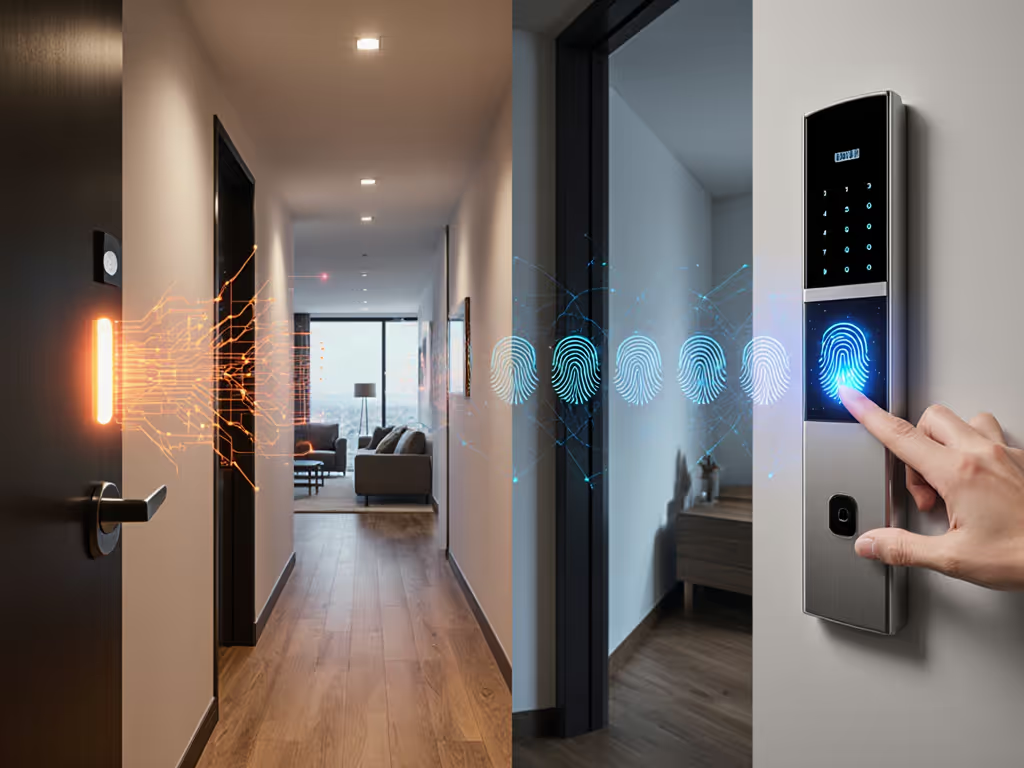
Matter vs Z-Wave: Multi-Property Lock Comparison
By Kenji Sato • 12th Apr
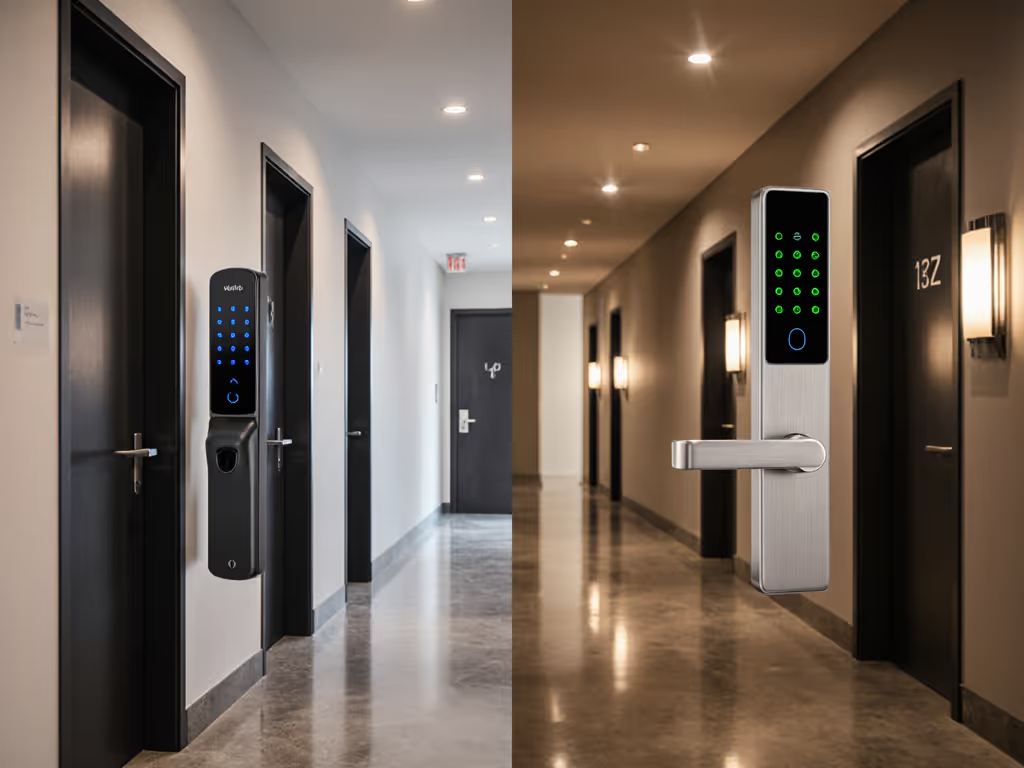
Managing smart locks across multiple properties (whether you're a property manager overseeing rental units, a landlord juggling investment homes, or a homeowner with a vacation property) demands both Matter protocol multi-property control capabilities and rock solid reliability. Unlike single property deployments, multi property lock networks expose protocol tradeoffs in range, scalability, cloud dependency, and offline operation (factors that become critical when you're managing access across distances and properties you can't physically access daily).
This guide cuts through vendor marketing to examine how each protocol handles the complexities of cross property coordination, then walks you through the decision criteria that matter most for your specific setup.
What's the Fundamental Difference Between Matter and Z-Wave?
The protocols start from different architectural places. Z-Wave is a complete protocol stack, covering physical layer through application layer as a proprietary mesh network operating in sub-GHz ISM bands. It has been in production since 1999 and specializes in low power, low bandwidth device coordination, ideal for battery backed sensors and control devices.
Matter, by contrast, is an application layer standard. It sits atop existing transport mechanisms: Wi-Fi, Thread (an IEEE 802.15.4 mesh), or even Ethernet. Think of it this way: Z-Wave is the complete car; Matter is the dashboard and controls that can run on different engines. This architectural difference explains why the protocols target different deployment scenarios and why mixing them requires translation layers. For a deeper dive on how each radio impacts lock performance, see our Z-Wave vs Wi-Fi vs Bluetooth guide.
For multi property deployments, this distinction matters immensely. Z-Wave devices speak directly to Z-Wave hubs; Matter devices coordinate through a hub running Matter's application logic, which may speak Wi-Fi to your cloud or Thread mesh to your local network. Each model carries different operational costs.
How Do Multi-Property Lock Networks Scale Differently on Each Protocol?
Scalability in a multi property context means two things: the number of devices per location and the geographic span across properties.
Z-Wave's scaling model:
Standard Z-Wave networks support up to 232 nodes per mesh. For a single rental property with locks, keypads, sensors, and smart lighting, you'll hit this ceiling when managing more than 20-30 actively communicating devices. Z-Wave Long Range (Z-Wave LR), introduced to address this, supports up to 4,000 nodes per network and achieves range up to one kilometer in line of sight. This is genuinely transformative for rural properties, estates, or multi building complexes.
However, Z-Wave creates a separate mesh for each gateway/hub. If you operate three rental properties in different towns, you'll maintain three independent Z-Wave networks, each with its own hub and key management burden. Coordination across properties isn't baked into the protocol, which you'd layer via a cloud service or home automation platform (Home Assistant, SmartThings). This reintroduces cloud dependency for cross property orchestration.
Matter's scaling model:
Matter supports approximately 250 connected devices per hub, lower than Z-Wave LR but sufficient for multi lock scenarios if you're running separate Matter hubs per property or a federated hub setup. Matter's real advantage emerges from its focus on ecosystem interoperability. Because Matter runs atop Thread, Wi-Fi, or other transports, you can theoretically operate a single Thread mesh fabric spanning Thread routers (Matter border routers) across nearby properties, provided the mesh can reach or be extended. This is harder to market and requires careful network planning, but it means cross property access control can live on a single logical network rather than three separate silos.
Matter hubs from major vendors (Amazon Echo, Apple HomePod mini, Google Nest) support roaming and fabric level user/automation sync, which simplifies multi property orchestration compared to managing three independent Z-Wave networks. If you're standardizing on Matter, review our cloud-free ecosystem tips to avoid unnecessary platform lock-in. That centralization, however, often depends on cloud connectivity for invitations and user management, a tradeoff I'll address below.
Security and Offline Resilience: Critical for Multi-Property Scenarios
When you manage properties remotely, internet outages and cloud platform changes are not hypothetical. I rebuilt an entire client's automations over a weekend when a vendor discontinued its bridge, a scenario that has burned enough deployers that choosing resilient infrastructure is now a table stakes decision.
Z-Wave security and offline operation:
Z-Wave uses 128-bit AES encryption with a network wide key, plus single frame authentication. It's a proven, battle tested model. Critically, Z-Wave devices operate offline indefinitely: if your hub loses internet, locks continue to respond to local commands, automations fire based on local triggers, and local admin interfaces remain functional. For models proven to operate without internet, see smart locks that work offline. For property managers, this means a vacation property's smart lock doesn't become a deadbolt when your internet connection fails or your hub loses WAN access.
Z-Wave also avoids mandatory account registration. You can pair a lock directly to a hub over the wireless mesh without creating a vendor account, without cloud credential sync, and without ongoing data harvest risk, a massive advantage for privacy conscious deployments and rentals where tenant data leakage is a liability.
Matter security and offline operation:
Matter implements stronger cryptography: PKI (public key infrastructure) with device certificates managed via a Distributed Compliance Ledger. End to end encryption and device certification enhance security posture.
However, Matter's offline story is murkier. A Matter device will continue operating locally once commissioned, but remote access, user invitation, and cross property automation often require Matter hub internet connectivity. Apple Home, for example, requires an always on home hub (Apple TV, HomePod mini) and an iCloud account to enable remote access. Google Home and Amazon Alexa Matter implementations similarly lean on cloud services for seamless cross property orchestration. This isn't a protocol limitation per se (local Thread mesh can operate offline), but the ecosystems built around Matter have largely chosen cloud first architectures for remote access and guest management.
For a multi property manager who values resilience, this is a hard constraint: Protocols over products. If your Matter deployment depends on Apple/Google/Amazon cloud services to coordinate access across properties, you've traded protocol flexibility for ecosystem convenience. When that ecosystem changes pricing, sunsets support, or shifts privacy policies, you're locked in.
Z-Wave deployments using local controllers (Home Assistant, Hubitat) avoid this trap. You maintain a local repository of automation, users, and access logs. Internet failure is an inconvenience, not a system failure.
Cross-Property Access Control and Guest Management
Rental property hosts and managers need granular, time bounded guest access. This is where protocol design and ecosystem choices diverge sharply.
Z-Wave via local platforms:
Home Assistant and Hubitat (both supporting Z-Wave) allow you to create local automations that generate temporary access codes, expire them on a schedule, and maintain full audit logs without transmitting guest data to cloud storage. A vacation property can issue a 48 hour guest code that auto disables; cleaners get a recurring Monday morning window. All of this logic executes locally, no guest app required, no cloud credentials shared. Hosts should also compare our best smart locks for rentals for code management features that scale.
Z-Wave locks (Aeotec, DragonTech, and others) expose local code management APIs. Sophisticated integrators can build booking calendar sync, automated code rotation, and cleaner/contractor window management, all serverless and transparent.
Matter via ecosystems:
Matter locks commissioned to Apple Home or Google Home can generate time limited invites, but the actual access control logic often lives in cloud services. Invites are transmitted via cloud, guest presence is verified via cloud APIs, and audit logs may be retained by the ecosystem operator, not locally. This is fine if you trust Apple or Google with your guest PII, property access patterns, and audit trails. Many won't.
Some Matter vendors are beginning to offer local APIs and automations (Eve, for example), but this is emerging, not standardized. Protocols over products: the protocol allows for local operation, but many products are currently designed for cloud centric control.
Range and Multi-Building Deployment
Z-Wave's long range advantage:
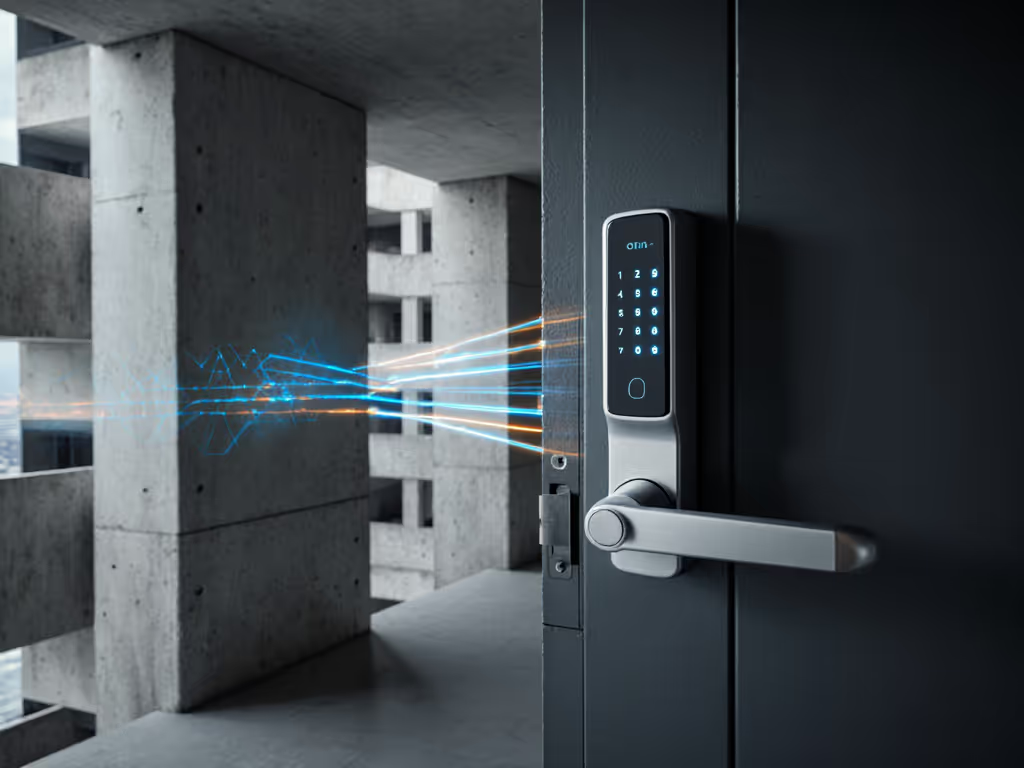
For multi building estates, rural compounds, or properties with detached garages/guest houses, Z-Wave LR's kilometer range capability is a game changer. A single hub can reach outbuildings 500+ meters away without repeaters in open terrain. This is a genuine technical strength that Matter hasn't matched. Thread and Wi-Fi can be extended via border routers and mesh nodes, but they require deliberate planning and often introduce Wi-Fi interference challenges in dense environments.
If your multi property setup includes adjacent or nearby buildings, Z-Wave LR is worth serious consideration. If your properties are geographically dispersed (separate towns), protocol choice matters far less than local hub infrastructure at each location.
Matter's ecosystem reach:
Matter's wider device support (cameras, locks, lights, displays) means you can compose a more unified smart home experience if you're willing to run a Matter hub per property. The challenge is stitching cross property automations and guest workflows, which still requires cloud services or a custom local coordinator.
Backup and Vendor Resilience
What happens when a lock vendor sunsets firmware updates, your hub manufacturer discontinues the product, or a cloud service you depend on shuts down?
Z-Wave advantage: Locks using Z-Wave speak a standardized protocol. You can migrate from one Z-Wave hub to another, from one vendor's hub to Home Assistant, or to a Hubitat Elevation without re-pairing or losing configuration. The protocol itself is managed by the Z-Wave Alliance, not a single corporation, though the Alliance's commitment and pace of innovation vary.
Matter's emerging status: Matter is standardized, but ecosystems (Apple Home, Google Home, Amazon Alexa) control the user experience. If Apple discontinues HomeKit or changes architecture, your Matter devices remain Matter compatible, but your automation and multi property workflows may be stranded. Migration is possible but not frictionless.
Decision Framework for Multi-Property Deployments
Choose Z-Wave if:
- You operate 2–10 properties and want independent, resilient mesh networks per location
- Local control and offline operation are non negotiable
- You're comfortable managing local hubs (Home Assistant, Hubitat) per property
- You value privacy and want zero cloud dependency for basic lock operation
- You have multi building compounds where long range coverage (LR) solves connectivity challenges
Choose Matter if:
- You prefer ecosystem convenience (Apple Home, Google Home, Amazon Alexa) over full local control
- You're willing to trust cloud services for remote access and cross property orchestration
- You want broader device support (cameras, speakers, displays) alongside locks
- You expect future vendor lock support to standardize around Matter (likely but not guaranteed)
Hybrid approach: Deploy Z-Wave locks with a local controller (Home Assistant) that bridges selected Z-Wave devices into a Matter fabric or cloud service for convenience without losing offline resilience. This requires more setup but gives you optionality. Interoperate today, migrate tomorrow, and stay sovereign throughout.
What Questions Should You Ask Vendors?
Before purchasing multi property lock infrastructure, clarify:
- Local control: Will the lock operate offline? Can you generate codes and unlock locally without cloud access?
- Account requirement: Must users create accounts with the lock vendor, or can access be managed via your hub?
- Audit logging: Are access logs stored locally and exportable, or retained only in cloud services?
- Guest code management: Can you generate time limited codes via local automations, or must you use the vendor's cloud app?
- Standards compliance: For Z-Wave, confirm S2 security certification. For Matter, confirm the lock is Matter certified and supports your chosen hub ecosystem.
- Migration path: If you stop using this product, can you export configurations, code history, or automation rules?
These questions expose whether you're buying a lock or renting access through a platform. The difference compounds across multiple properties.
Next Steps for Your Multi-Property Setup
Start by mapping your properties' connectivity and geographic layout. If they're within a few hundred meters and you want unified automation, consider Z-Wave LR with a local controller. If they're spread across regions and you want ecosystem convenience, Matter via your preferred hub (HomePod, Echo, Nest) offers simpler initial setup, though cross property workflows will lean on cloud services.
Test offline scenarios before committing: kill your internet, trigger a lock command, and verify it responds. While testing, evaluate emergency power options so lock access remains reliable during extended outages. Cloud first vendors will fail this test; resilient ones will succeed. For multi property managers, this single test often reveals which vendors have thought through failure modes.
Join local home automation communities and ask about Z-Wave and Matter deployments in your region. Real world deployment stories from others managing similar property counts and geographies are invaluable for uncovering edge cases marketing materials don't mention.
Finally, document your choice and the specific hubs, locks, and integrations you deploy. When a vendor changes course or a platform sunsetting looms, you'll have a clear record of what ran your system and what alternatives exist. That resilience, the ability to adapt when markets shift, is the ultimate insurance for multi property deployments.
Related Articles