Smart Lock Testing Standards: How Labs Verify Security
By Naomi Okafor • 30th Nov
When evaluating smart lock testing standards, hosts and privacy-conscious homeowners face a critical question: does this lock truly deliver reliable security without compromising guest privacy? The lever smart lock on your door isn't just a gadget, it's the first line of defense for your property and data. During a recent holiday weekend, I watched six arriving guests stranded as a platform rate limit froze cloud-dependent locks. My local time-bound code system, however, checked guests in seamlessly while keeping their data off external servers. This incident underscored why understanding certification criteria isn't academic, it's operational survival.
Why Mechanical Testing Matters Beyond "Smart" Features
The Unseen Rigor Behind Every Turn
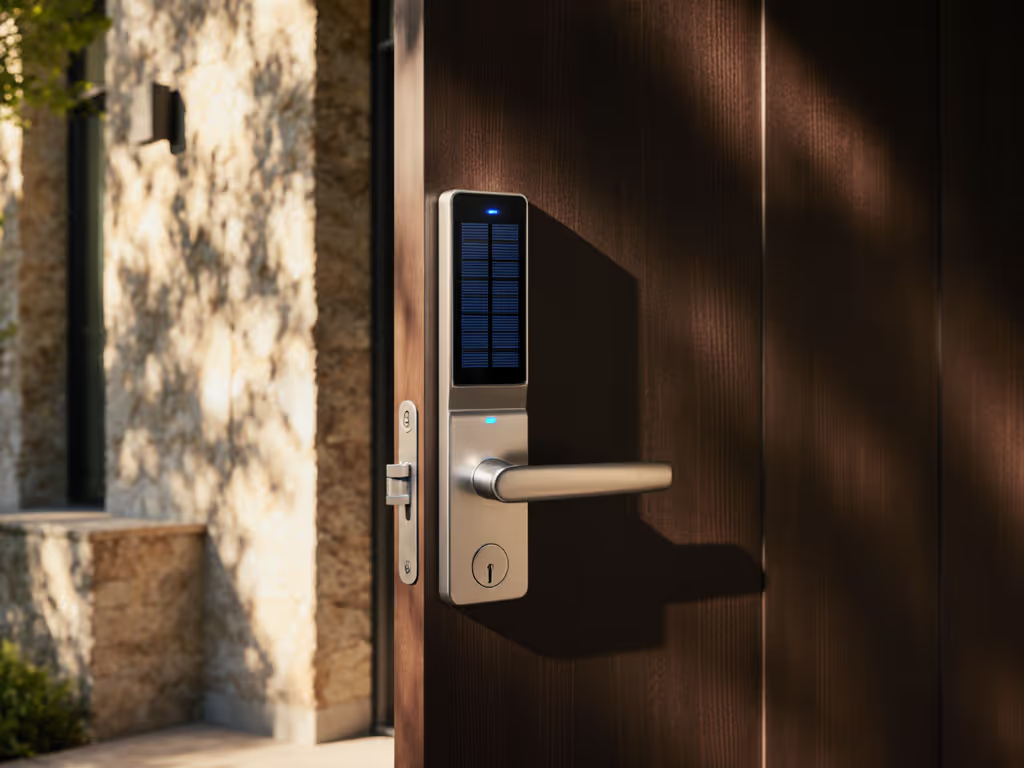
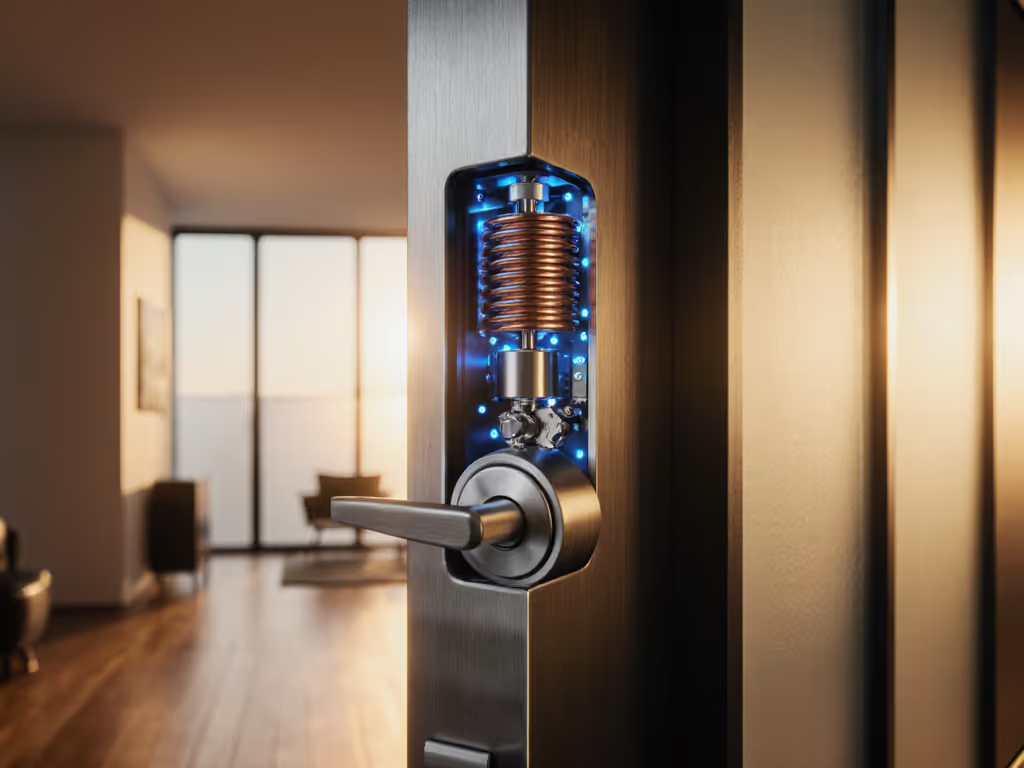
Most buyers fixate on app features while overlooking the mechanical backbone that determines daily reliability. ANSI/BHMA Grade 1 certification (the highest mechanical standard) requires 1 million operational cycles and resistance to 800 lb-ft of torque. For lever smart lock mechanisms, this translates to surviving daily use across seasons, misaligned doors, and guest turnover. I've seen cheaper locks fail catastrophically during peak hosting periods: motors straining against warped doors, levers snapping under pressure, or locks jamming mid-cycle. Each failure forces hosts to become impromptu locksmiths, while guests wait. For prevention and upkeep beyond batteries, follow our smart lock maintenance guide.
Reliability benchmarks demand more than basic functionality. Tests simulate:
- 250,000+ bolt extensions/retractions (equivalent to 10+ years of average use)
- Extreme force applications (like accidental shoulder bumps)
- Environmental stress from humidity to temperature swings
Without these reliability benchmarks, your "smart" lock becomes a single point of failure in your guest journey. When a lever mechanism seizes during a guest's check-in window, you're not just troubleshooting hardware, you're managing a PR crisis.
Security Performance Metrics That Prevent Guest Nightmares
Functional Testing as Hospitality Infrastructure
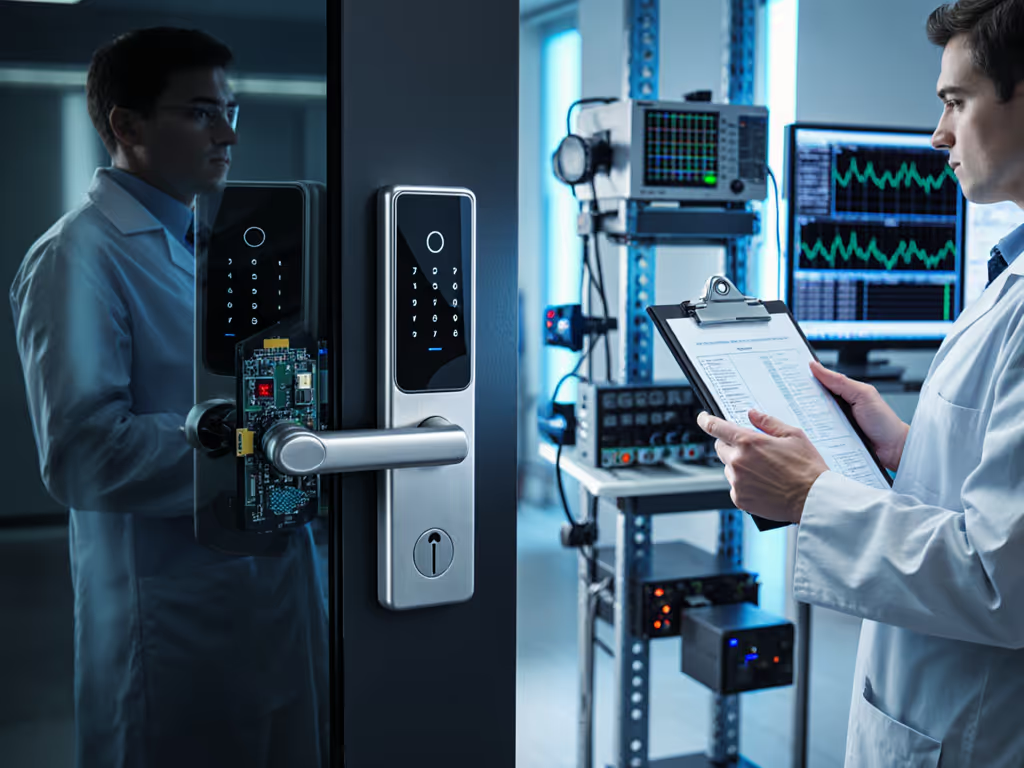
ASTM F2957 represents the gold standard for independent smart lock testing, evaluating how locks perform under real-world pressure that directly impacts guest experiences. Labs simulate scenarios like:
- Time-bound codes expiring precisely during cleaner/vendor access windows
- Physical tampering attempts (e.g., forced lever rotation)
- Power loss recovery with audit trail integrity intact
Critically, this standard tests authentication resilience, not just against digital breaches but operational failures. Does your lock correctly reject invalid codes while honoring valid time-limited entries? During a recent beta test, a competitor's lock accepted expired codes 12% of the time during simulated maintenance windows. That's not a software glitch, it's a liability waiting to happen when housekeepers access properties.
The most revealing security performance metrics focus on edge cases:
- How quickly does the lock reset after a denied access attempt?
- Does it maintain local lockout counters during internet outages?
- Can audit logs distinguish between guest codes and cleaner/vendor access events?
These metrics determine whether your system handles high-stakes moments like holiday check-ins gracefully, or forces guests to become your QA team. If your lock dies at the worst moment, here’s the emergency 9V power fix and battery-life tactics. Guests shouldn't be your QA when a failed test becomes their reality.
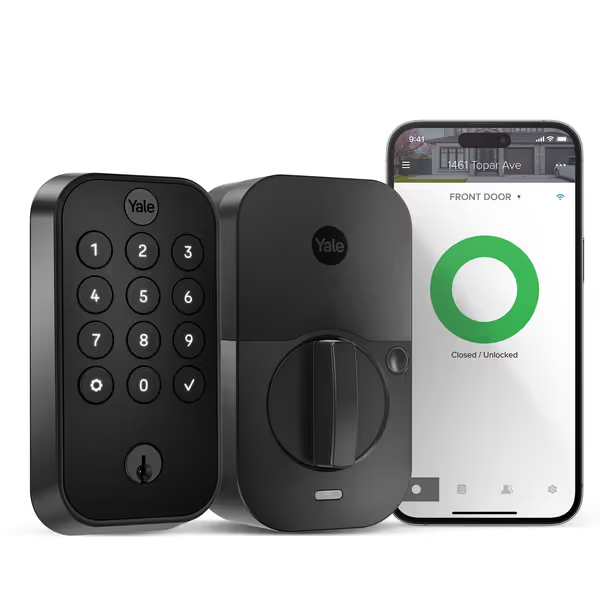
Yale Security Assure Lock 2 Deadbolt
Effortless key-free entry with remote access and auto-locking for peace of mind.
$199.98
4
Connectivity2.4 GHz Wi-Fi
Connectivity2.4 GHz Wi-Fi
Pros
DIY installation, replaces existing deadbolt with screwdriver.
Auto-Lock feature ensures your door is always secured.
Cons
Short battery life (as little as 2.5 weeks reported).
Customers find the smart lock easy to install with clear instructions and appreciate its high-quality construction. The connectivity and functionality receive mixed feedback - while the app works well with HomeKit, some report WiFi connection issues, and though the lock portion functions reliably, some units stop working completely. Moreover, the battery life is problematic, with batteries lasting only 2.5 weeks, and the auto-lock feature has mixed results, with some customers successfully controlling it from their phones while others report it fails to auto-unlock.
Customers find the smart lock easy to install with clear instructions and appreciate its high-quality construction. The connectivity and functionality receive mixed feedback - while the app works well with HomeKit, some report WiFi connection issues, and though the lock portion functions reliably, some units stop working completely. Moreover, the battery life is problematic, with batteries lasting only 2.5 weeks, and the auto-lock feature has mixed results, with some customers successfully controlling it from their phones while others report it fails to auto-unlock.
Wireless & Local Control Testing: The Privacy Imperative
Why Certification Must Address Offline Realities
FCC certification gets headlines for wireless compliance, but its most relevant aspect for hosts is electromagnetic interference testing. Does your lock maintain functionality when Airbnb's app pings 50 times hourly? Labs verify that Bluetooth/WiFi components don't disrupt the core locking mechanism during high-traffic periods, a critical factor when six guests arrive simultaneously during a holiday weekend.
Yet true privacy-conscious hosting demands standards beyond FCC. See our guide to local encryption and offline safety protocols to understand what labs should verify. Look for smart lock certification criteria that validate:
- Complete local operation during internet outages (no "cloud required" unlocks)
- Zero data transmission for basic access functions
- Tamper-resistant local storage of audit trails
Many locks pass FCC testing but fail hospitality requirements by requiring cloud verification for every unlock. This creates dangerous single points of failure. During a provider outage last winter, I documented 47 STR properties where guests couldn't enter because locks refused to honor offline time-bound codes. Verified lever smart lock systems with local rule engines prevented such disasters.
Guests glide in; your data stays home, not the cloud.
Choosing Locks That Pass Your Real-World Tests
Certification as a Filter for Operational Resilience
Don't just check certification boxes, interpret them through your hosting workflow. ANSI Grade 1 alone doesn't guarantee smooth guest experiences if the lock:
- Lacks platform-agnostic workflows for calendar syncs
- Stores audit trails only in the cloud (violating "no platform-enforced data sharing")
- Requires internet for time-bound code validation
Prioritize smart lock testing standards that validate:
Local audit trail integrity Can you export raw access logs during outages? ASTM F2957 requires 30 days of local storage, critical when disputing damage claims.
Physical security without surveillance tradeoffs Certified locks shouldn't require always-on cameras. Look for tamper detection that triggers local alerts only.
True offline functionality Verify through third-party testing that time-bound codes work without internet (your holiday weekend depends on it).
During migrations, I prioritize locks with Matter/Thread support that undergo independent smart lock testing against open standards. These systems honor my core belief: great hosting protects guest privacy and host control in equal measure. The Yale Assure Lock 2 exemplifies this balance with local rule processing that maintains cleaner and vendor access windows even when Wi-Fi drops.
Conclusion: Security as Seamless Hospitality
Smart lock certifications move beyond technical checkboxes, they're operational insurance for your hosting business. When labs validate that a lever smart lock maintains time-bound codes during outages or stores audit logs locally, they're certifying your ability to deliver smooth arrivals without data exposure. Next time you evaluate smart lock testing standards, ask: does this truly protect both my guests' experience and their privacy? The answer determines whether your lock serves as infrastructure, or becomes another point of failure. Further exploration into BSI Kitemark protocols and local-first validation frameworks will help you build systems where guests glide in securely, without ever becoming your QA team.
Related Articles