Smart Lock History: When Mechanical Reliability Met Digital Security
By Ava Thompson • 11th Dec
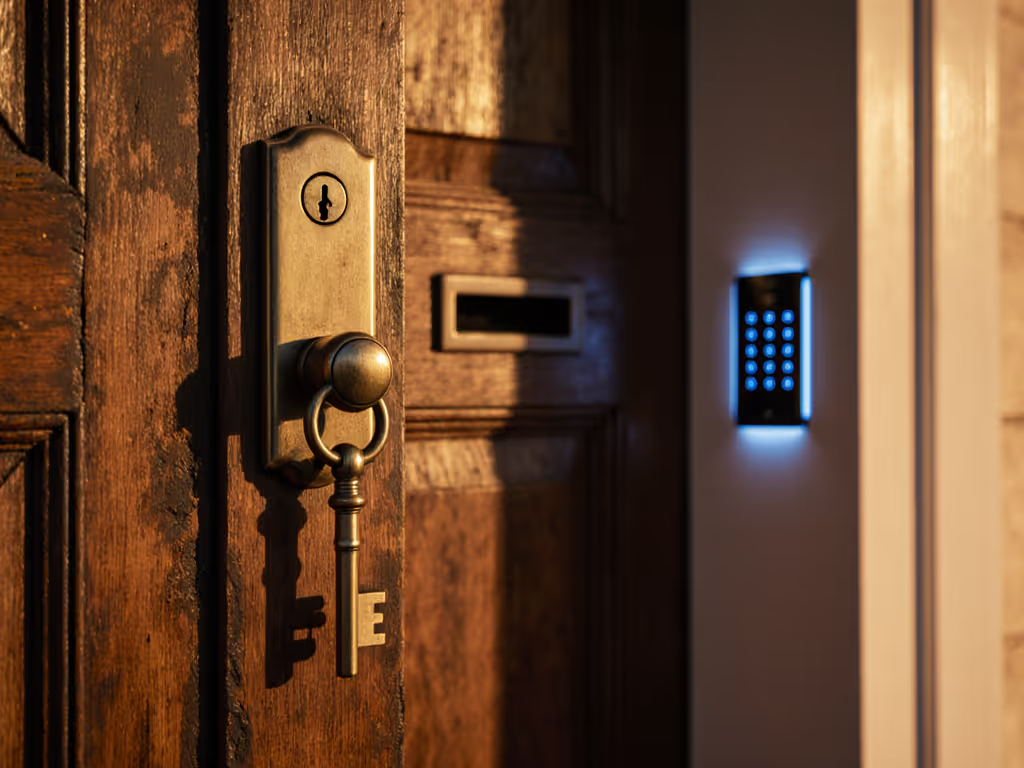
Understanding smart lock history reveals why a solid mechanical foundation determines whether your door lock becomes a convenience or a headache. As someone who's fixed more frozen deadbolts than I can count, I've learned that digital features only enhance security when built on reliable mechanics. Too many homeowners chase the latest app integration while ignoring basic door prep, until a winter storm hits and their smart lock refuses to budge.
I still remember helping a neighbor during last winter's blizzard when his fancy smart deadbolt seized up. Weak batteries, a misaligned strike plate, and tight spindle tolerance combined into a total lockout situation. We spent hours warming the mechanism before we could even access the interior screws. That experience reinforced what I tell all my clients: Secure the door first; then add brains that respect privacy.
How did mechanical locks evolve to support today's smart technology?
Long before Bluetooth and biometrics, locksmiths wrestled with fundamental reliability issues we still face today. The ancient Egyptians crafted wooden pin-tumbler locks around 4000 BCE, but the real game changer came in 1861 when Linus Yale Jr. introduced the cylinder lock. This design (which still forms the basis of most residential locks today) solved critical problems with spindle tolerance and latch torque that earlier mechanisms couldn't handle.
Strike plate alignment has always been the silent killer of lock reliability, whether mechanical or smart.
The Industrial Revolution accelerated lock development through standardized manufacturing. By the 1880s, mass-produced locks achieved consistent ANSI/BHMA Grade ratings that gave consumers reliable security benchmarks. If you're unsure what these ratings mean, see our ANSI/BHMA grades explained for a quick breakdown. These mechanical innovations weren't just about keeping thieves out, they established the precision engineering needed for today's smart locks to operate smoothly.
What were the earliest electronic door security systems?
The transition from purely mechanical to electrically assisted locks began surprisingly early. Patents for electromagnetic door locks appeared as far back as 1894, but practical applications didn't emerge until the mid 20th century. Hotels led the charge with keycard systems in the 1970s, and VingCard's 1979 recodable keycard lock solved the persistent problem of lost physical keys without requiring lock replacement.
These early electronic door security timeline milestones taught us crucial lessons: For practical tips on keeping access when batteries die, read our emergency 9V power fix.
- Power reliability matters more than features
- Mechanical operation must function independently of electronics
- User interfaces need to work in all lighting conditions
The hotel industry's experience with magnetic stripe cards revealed how quickly "smart" solutions could become maintenance nightmares when physical durability was overlooked. Cards demagnetized, readers jammed, and proprietary systems created vendor lock in, problems that still plague modern smart home security.
When did smart locks actually become "smart"?
The true turning point in smart lock history came between 2010 to 2015 when IoT connectivity transformed standalone electronic locks into ecosystem players. Before 2010, most "smart" locks were merely mechanical lock development with added keypads or fingerprint scanners, what Alibaba's 2017 white paper called "electronic door locks" rather than truly intelligent systems.
The convergence of three technologies enabled real smart functionality:
- Affordable Bluetooth/WiFi chips suitable for battery operation
- Standardized communication protocols (Z-Wave, Zigbee)
- Smartphone proliferation creating ubiquitous control interfaces If you're choosing a radio standard, start with our Z-Wave vs Wi-Fi vs Bluetooth guide.
But many early adopters learned the hard way that network connectivity doesn't compensate for poor door prep and fit. I've seen countless installations where homeowners spent $300 on a WiFi lock only to discover their door's 2-1/8" backset didn't match the lock's requirements, causing chronic misalignment.
What historical lessons should guide today's smart lock buyers?
Every generation of lock technology repeats the same fundamental trade off: convenience versus reliability. Today's smart home security systems face the same challenges as their mechanical ancestors, just with new variables like battery life and cloud dependency.
Three historical lock innovations teach us what really matters:
- The Yale legacy: The 1861 pin-tumbler design succeeded because it solved real-world problems with precision engineering. Today's best smart locks maintain this philosophy, like the Kwikset Powerbolt 250 that keeps a mechanical keyway while adding keypad convenience.
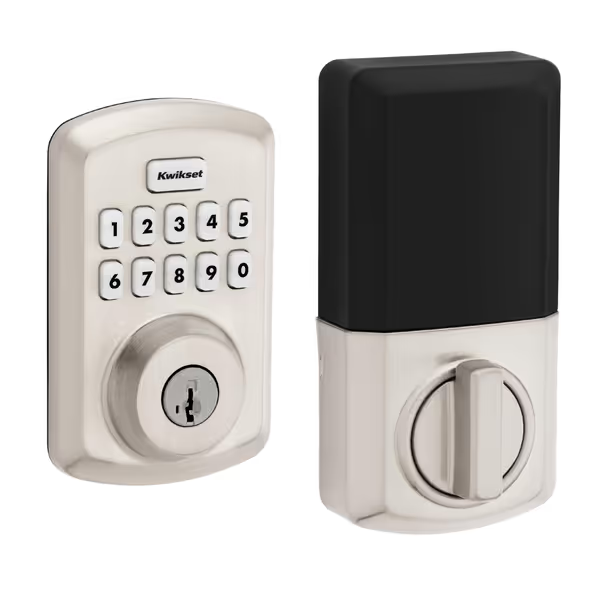
Kwikset Powerbolt 250 Electronic Deadbolt
Convenient keyless entry with customizable codes and auto-locking security.
$69.98
User CodesUp to 25 + 5 One-Time
User CodesUp to 25 + 5 One-Time
Pros
Easy installation with BILT app guidance
Customizable codes & auto-lock for convenience
Cons
Mixed reviews on long-term functionality and programming difficulty
Customers find the electronic deadbolt easy to install and use, with clear installation instructions and convenient keyless entry features. However, functionality and programming ability receive mixed reviews - while some report it works flawlessly and can set multiple codes, others say it stops working after a few days and find it hard to program.
Customers find the electronic deadbolt easy to install and use, with clear installation instructions and convenient keyless entry features. However, functionality and programming ability receive mixed reviews - while some report it works flawlessly and can set multiple codes, others say it stops working after a few days and find it hard to program.
-
The Schlage breakthrough: Walter Schlage's 1909 innovation adding light control to locks anticipated today's smart home integration. Modern equivalents like the Schlage Encode leverage this legacy with proper ANSI/BHMA Grade 1 certification for residential durability.
-
The hotel industry lesson: When VingCard introduced recodable keycards in 1979, they solved the guest access problem without compromising physical security. This principle remains vital for vacation rental hosts seeking smart home security that works without cloud dependency.
How can renters add smart features without compromising their security foundation?
Rental restrictions create unique challenges for smart lock history enthusiasts. Most landlords prohibit exterior hardware modifications, yet many renters need better guest access management than traditional keys allow. The solution lies in retrofits that respect both security and lease agreements:
For lease-friendly options and landlord tips, see our no-drill smart locks for renters. - Peephole cameras with door sensors: Monitor activity without touching the lock mechanism
- Interior keypad adapters: Convert existing deadbolts to keyless entry (check spindle compatibility first)
- Smart doorstops with vibration sensors: Provide basic security alerts without physical modification
Always prioritize mechanical reliability over digital bells and whistles. I've seen renters install $200 smart locks only to discover their door's sagging alignment exceeded the motor's latch torque capacity. No amount of app integration can compensate for poor door prep and fit.
What's the most important consideration when choosing a smart lock today?
After decades of mechanical lock development and recent smart lock evolution, one truth remains constant: the physical lock mechanism must work flawlessly on its own. No amount of cloud connectivity or fancy app features matters when your deadbolt won't throw because of poor strike plate alignment.
When evaluating smart locks, ask:
- Does it maintain full mechanical operation during power/battery failure?
- Can it function entirely offline without cloud dependency?
- Does it accommodate real-world door misalignment through proper spindle tolerance?
Modern locks like those with Matter/Thread connectivity show promise for local control, but they still depend on fundamentally sound mechanics. Keep a mechanical fallback not just as an emergency option, but as the baseline standard for daily operation.
The smartest security solutions honor what we've learned from centuries of historical lock innovations, that convenience without reliability creates vulnerability. Start with a door that closes tightly, a deadbolt that throws smoothly, and strike plate screws anchored into solid framing. Only then should you consider adding digital convenience that respects your privacy and autonomy.
Your next step? Grab a business card and slide it between your closed door and frame. If it fits easily, spend time fixing your door alignment before considering any smart lock upgrade. A millimeter of play creates more security risk than any unpatched firmware ever will.
Related Articles