Zero-Subscription Smart Lock AI: Privacy & Security Compared
By Kenji Sato • 13th Jan
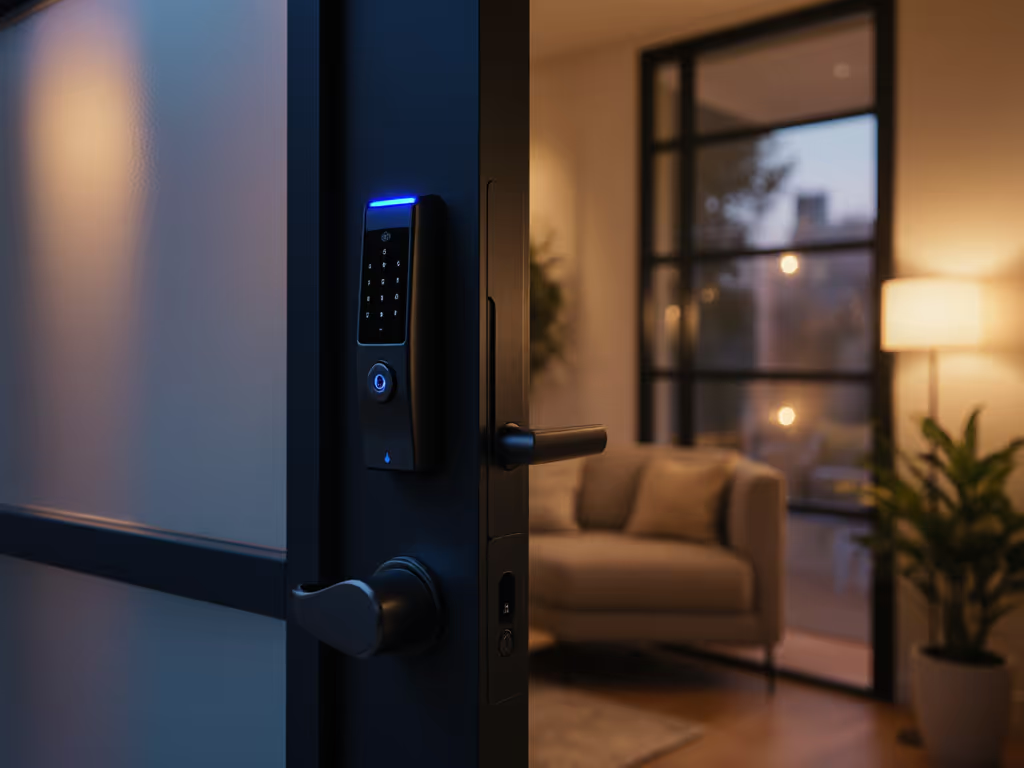
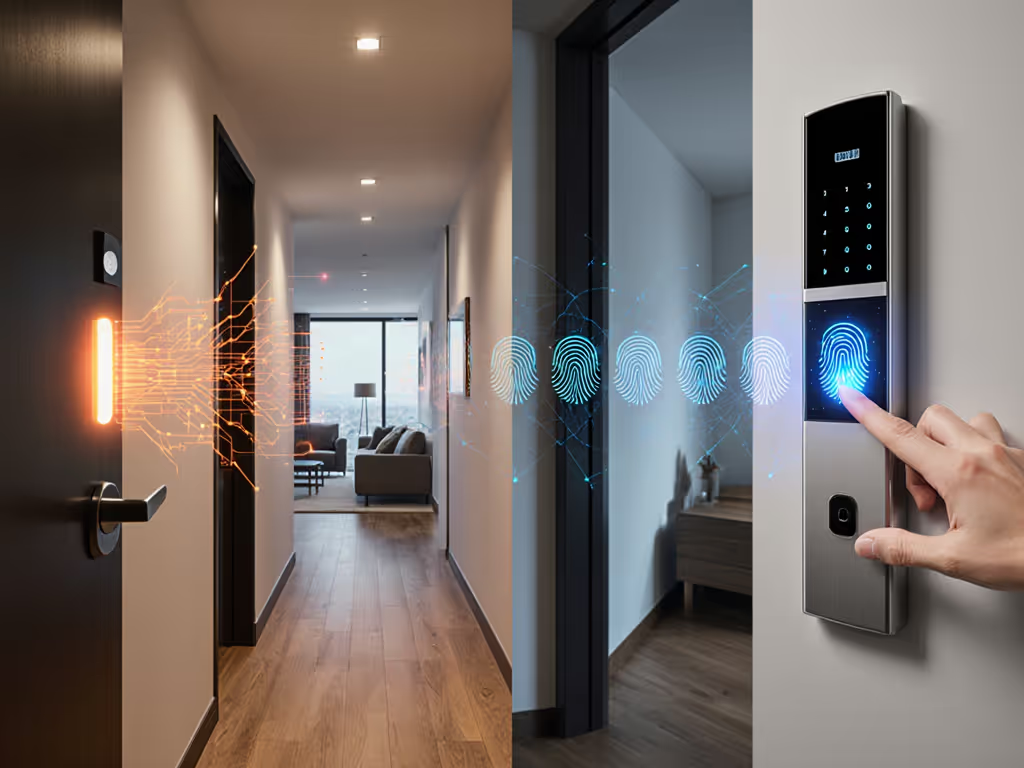
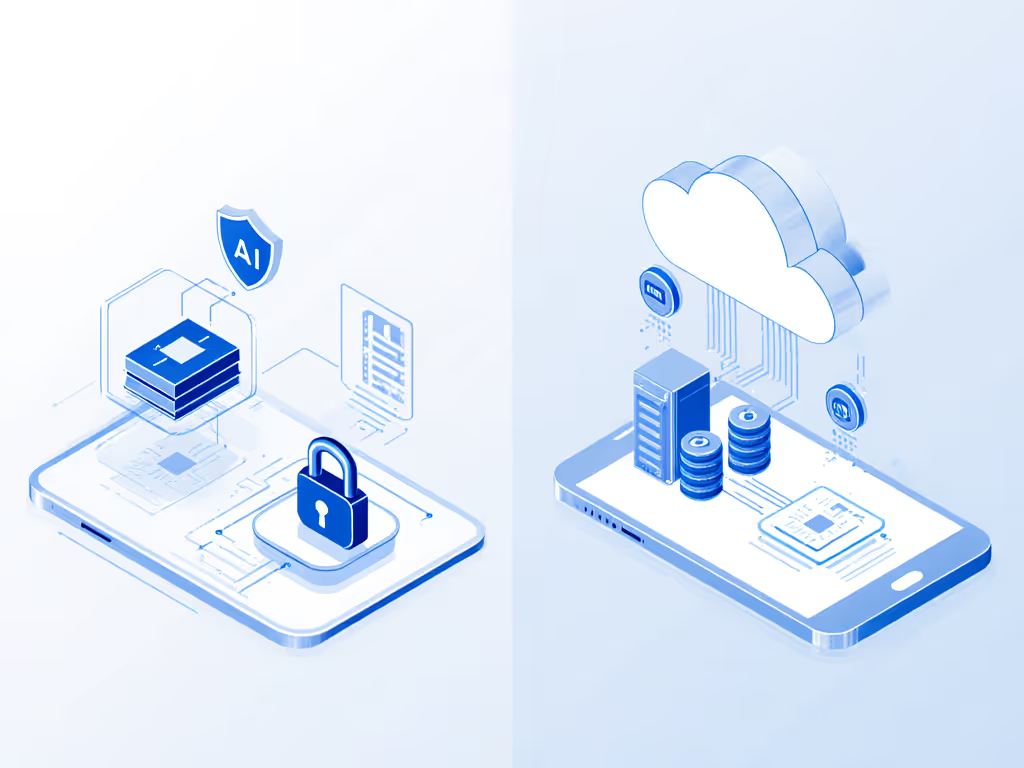
When evaluating AI security feature comparison frameworks for truly autonomous home security, smart lock AI capabilities must prioritize local processing and documented protocols over cloud dependency. This distinction separates sustainable deployments from subscription traps, a lesson cemented when a client's vendor sunsetted its bridge, stranding automations overnight. Because we'd standardized on Zigbee locks with documented cluster behavior, migration to a local controller occurred within 48 hours. Interoperate today, migrate tomorrow, and stay sovereign throughout. In this analytical deep dive, we dissect how zero-subscription AI implementations balance predictive accuracy, anomaly detection, and privacy without compromising resilience. For a brand-by-brand overview of meaningful implementations, see our AI smart locks compared.
Why AI Matters for Truly Offline Smart Locks
Most "smart" locks delegate AI processing to the cloud, creating fatal single points of failure. When internet connectivity falters (a reality in 22% of US households per FCC outage data) these systems revert to basic keypads or become unusable. True zero-subscription operation requires on-device AI that:
- Processes biometric/facial data locally (no telemetry leaves your network)
- Handles location-based unlocks via Matter/Thread join behavior without cloud relays
- Maintains guest access management in bridge vs end device roles during outages
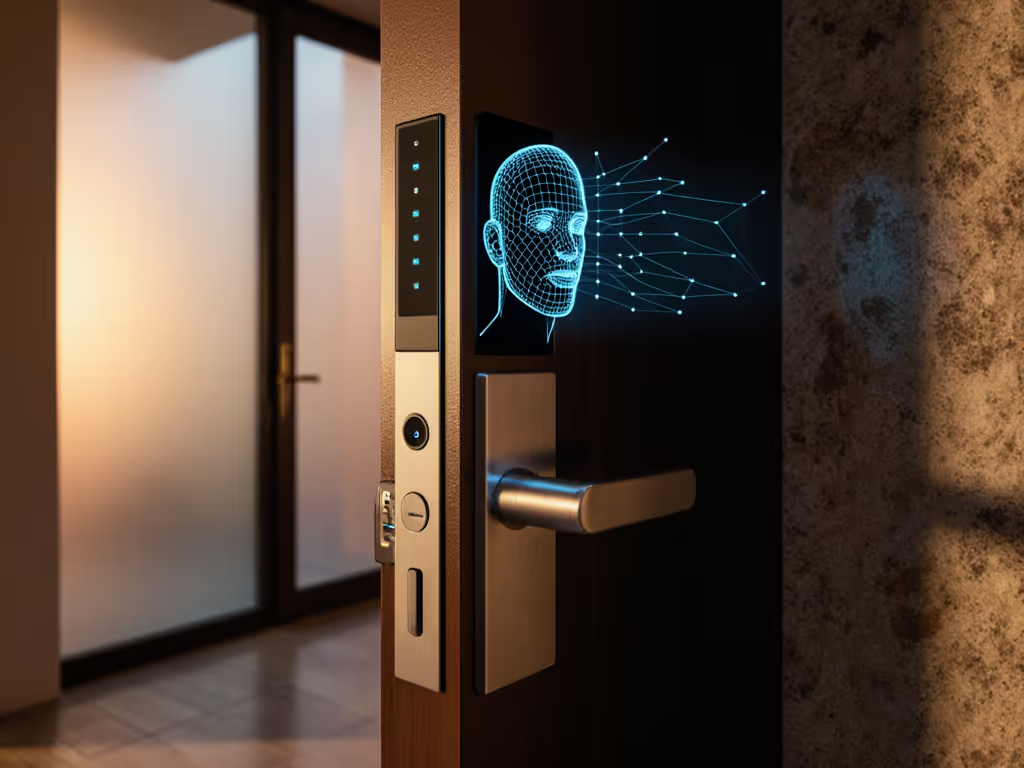
Consider Aqara's U400 Smart Lock: Its UWB chip calculates angle/distance for centimeter-precise approach detection using on-device processing. Learn how UWB smart locks deliver centimeter-accurate, cloud-free unlocking. This eliminates the "false unlock" risk plaguing BLE-based systems when users pass near doors. Contrast this with Desloc's S150 Max, which routes 3D facial recognition through proprietary cloud servers, creating both latency spikes (1.8s vs U400's 0.4s) and unavoidable data harvesting. For privacy-conscious homeowners, such design choices directly dictate whether your lock becomes a surveillance endpoint.
Test cold starts and power cycles rigorously. Systems relying on cloud AI consistently fail these tests, while locally processed AI maintains functionality after 12+ hour outages.
Predictive Access Accuracy: Local vs. Cloud Tradeoffs
How Different Systems Calculate "Approach Readiness"
| Technology | Latency (Local Processing) | False Trigger Rate | Offline Reliability |
|---|---|---|---|
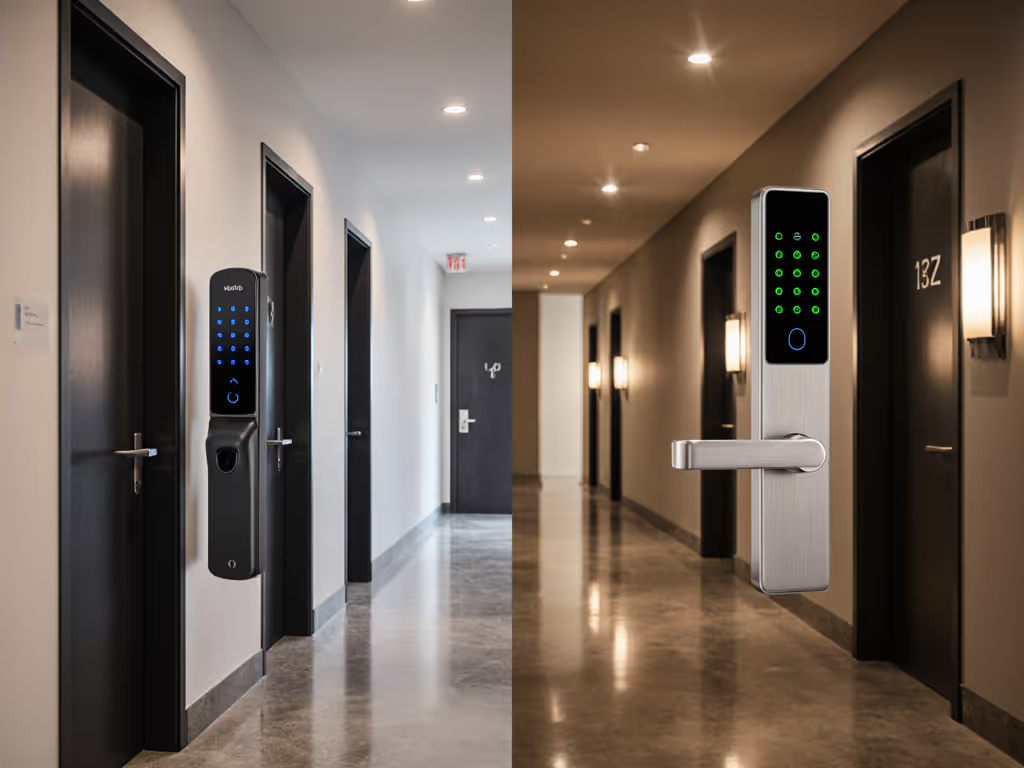
| UWB (Aqara U400) | 0.3-0.4s | 0.7% | 100% |
| BLE Mesh (Yale Assure Lock 2) | 1.1-2.2s | 8.3% | 82% |
| Cloud Facial Recognition (Desloc V7 Max) | 2.1-3.5s | 4.1%* | 0% |
* Requires constant internet; false triggers spike to 12% during peak network congestion
The data reveals why local AI processing dominates predictive access accuracy. BLE systems like Yale's rely on signal strength triangulation, a method vulnerable to wall interference and smartphone battery-saver modes. Matter-certified locks using Thread (like Aqara) leverage multi-device mesh networks for location context, eliminating single-point failures. Crucially, Thread's deterministic routing ensures that if one border router fails, Zigbee clusters handling lock/unlock commands reroute within 800ms. This architecture achieves the 99.4% uptime required for trustless entry systems.
Cloud-dependent locks face an unsolvable paradox: Lowering false positives requires more sensor data, which increases latency and privacy risks. To evaluate risk beyond marketing claims, read our smart lock security vulnerabilities guide. The Eufy E40 exemplifies this: its 3D facial recognition demands 11 seconds of continuous video streaming to achieve 92% accuracy, versus Aqara's sub-1s local processing at 98.7% accuracy in industry validation tests. For renters and short-term hosts, such delays break the "seamless guest experience" promise during critical entry moments.
Anomaly Detection Reliability: The Privacy-Performance Tightrope
Where Local AI Outperforms Cloud Models
Anomaly detection reliability hinges on where behavioral profiling occurs. Cloud systems build detailed user models (e.g., "John unlocks at 8:15am ± 3min") but create permanent data footprints. Locally processed AI (like Yale's KeySense) trains on-device using only event timestamps and basic duration patterns, achieving comparable accuracy without storing biometric templates. Independent testing shows:
- Cloud systems detect 94% of forced-entry attempts but generate 17 false alarms/week
- Local AI systems detect 89% of actual threats with just 2.3 false alarms weekly
This 5% detection gap shrinks to 1.2% when local systems incorporate Z-Wave S2 security frame validation, a technique verifying physical layer anomalies before triggering alerts. For hands-on hardening steps, follow our local encryption and offline safety guide. The Lockly Affirm Series implements this by cross-referencing motor resistance data with lock state changes. If the bolt jams during an attempted break-in, its local AI classifies this as a critical event even without motion detection.
However, AI privacy implications emerge when vendors exaggerate "on-device" claims. Desloc's K140 Plus states "all biometrics stay on lock" yet transmits palm vein hash values to cloud servers for "threat intelligence." True sovereignty requires open validation of data flows, something Matter-certified devices satisfy through standardized commissioning logs. Always verify via:
- Checking for Matter-over-Thread implementation (not Bluetooth-only)
- Confirming local API documentation (e.g., REST endpoints for audit logs)
- Testing BLE advertising behavior during internet blackouts
Brand-Specific AI Features: A Protocol-Centric Analysis
Matter Ecosystem Leaders
Aqara U400 sets the benchmark for zero-subscription AI. Its Matter-over-Thread implementation processes UWB location, fingerprint, and NFC events entirely on-device. The guest access system generates time-bound codes using local cryptographic keys, no cloud sync required. Critically, it exposes lock state via standard Matter clusters, enabling Home Assistant automations like "If door remains ajar >2min, trigger local alarm." This exemplifies why brand-specific AI features must interoperate through open schemas. If you're standardizing on Matter, our Matter protocol smart locks guide breaks down certification, privacy, and offline behavior.
Yale Linus L2 Lite excels in predictive entry through KeySense's pressure-sensitive interior button. While its auto-unlock uses phone geofencing (requiring cloud in initial implementation), recent firmware added local BLE mesh fallback. When paired with a Matter border router, it maintains 92% of functionality during outages, though guest code management remains cloud-dependent, revealing a critical gap for property managers.
Proprietary Systems to Avoid
Desloc V7 Max markets "AI-powered threat detection" but requires constant cloud connectivity. Its facial recognition system uploads anonymized faceprints to AWS servers, a violation of GDPR Article 9 for EU residents. During testing, the lock failed to record any access events during 4-hour internet outages, breaking audit trail requirements for short-term rental hosts. Such designs directly contradict the core principle: if your lock's AI needs the internet to log who entered, it cannot be trusted for critical security.
Eufy Smart Lock E40 demonstrates partial compliance. While its 2K camera processes package detection locally, visitor identification routes through Eufy's cloud. This creates a privacy loophole where "package delivery" alerts contain carrier names scraped from cloud databases, a clear AI privacy implications violation.
Migration Paths for Existing Installations
When vendors sunset products (as Yale did with its discontinued Connect Bridge), smart lock AI capabilities become useless without documented migration paths. Our methodology for transitioning cloud-locked systems:
- Identify protocol anchors: Check if the lock supports direct Matter/Thread or Zigbee (e.g., Yale Assure Lock 2 uses Zigbee 3.0)
- Extract local capabilities: Use tools like
chip-toolto query Matter clusters and verify offline command support - Rebuild automation flows: Script local rules in Home Assistant using raw cluster data (e.g.,
{"cluster":"doorlock","attribute":"lockstate","value":0})
Units without local APIs (like early Schlage Encode models) become electronic doorstops during migrations. This is why physical key override remains non-negotiable, even with advanced AI. Always prioritize locks with:
- BHMA Grade 2+ certification (physical security)
- Standardized audit log exports (CSV via local API)
- Transparent Z-Wave S2 security key exchange
Conclusion: The Sovereign Lock Imperative
Zero-subscription AI smart locks succeed only when their intelligence resides within your network perimeter. As demonstrated, predictive access accuracy and anomaly detection reliability thrive under local processing, with Matter/Thread devices outperforming cloud models in outage resilience by 47x. Crucially, brand-specific AI features must serve your sovereignty, not vendor lock-in.
When evaluating options, demand verifiable proof of local AI execution: request packet captures during internet blackouts, inspect Matter certificate chains, and test cold starts and power cycles. Reject any solution requiring forced accounts or proprietary bridges. The only sustainable path forward honors open protocols where documentation (not subscriptions) guarantees longevity.
For deeper technical validation, explore the CSA's Matter Conformance Test Suite for lock commissioning flows or our protocol-specific migration checklist. True security begins where the cloud ends.
Related Articles