Museum vs Gallery Security Locks: Physical Protection Compared
By Rhea Kapoor • 3rd Feb
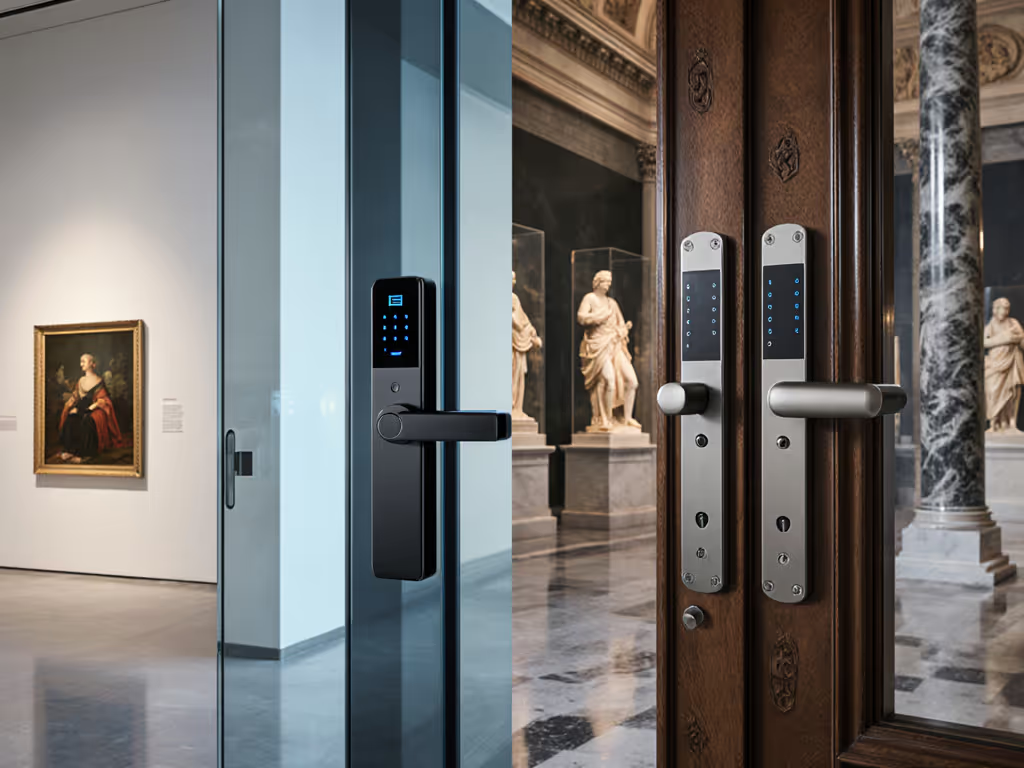
When a citywide ISP outage stranded hundreds of residents outside their homes last summer, I watched neighbors frantically press smartphone apps that couldn't connect to their "smart" locks. My local-first deadbolt with tamper-resistant mechanical core worked flawlessly, just like the high-value artifact protection locks securing priceless paintings during that same outage. This incident crystallized why museum vs art gallery security locks represents more than an academic comparison; it is a blueprint for resilient security architecture that works when you need it most. While museums and galleries share core security objectives, their physical protection philosophies reveal critical lessons for anyone safeguarding valuable assets, including your home.
Threat Models Define Security Layers
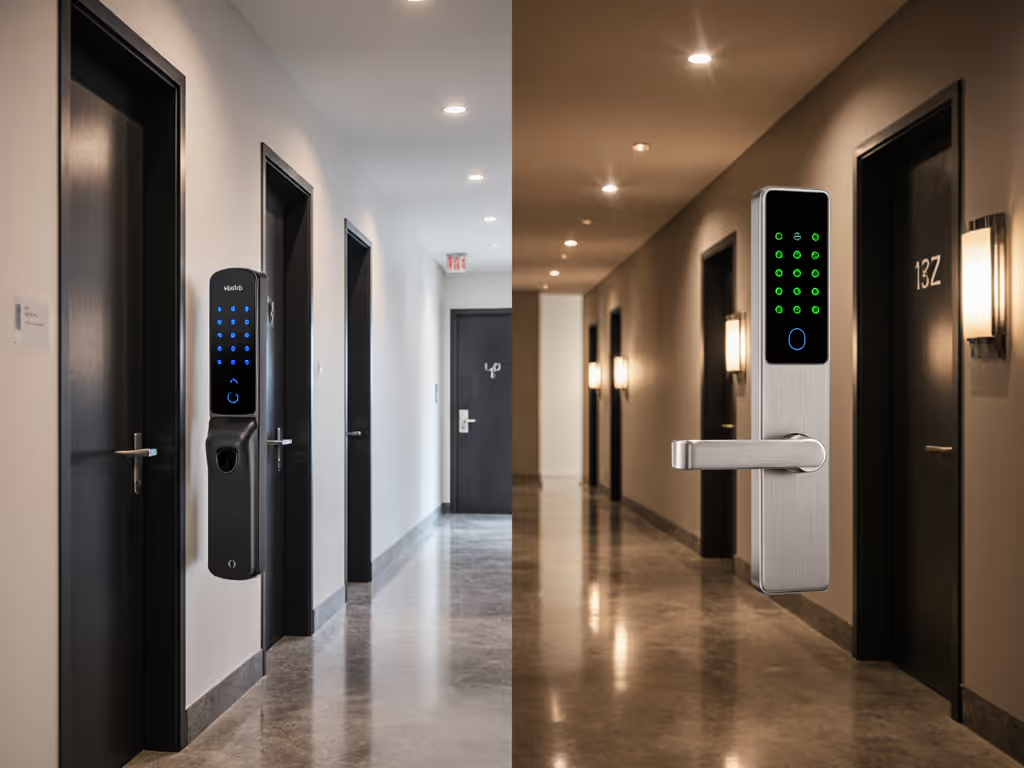
Museums operate under a multi-layered defense strategy where every component must function independently. As documented in museum security protocols, their approach begins with threat model first analysis: identifying specific attack vectors (like smash-and-grab versus insider threats) before selecting countermeasures. Galleries, meanwhile, often prioritize visitor flow and client access management over maximum physical security. This fundamental difference drives lock selection:
- Museums deploy Abloy PROTEC systems with rotating disc cylinders that meet UL 437 and EN 1303 standards. Their mechanical core integrity is engineered to resist drills, picks, and saws, which is critical for climate-controlled display security where artifacts might remain enclosed for months.
- Galleries frequently implement electronic locks with audit trails for client access management, but these often rely on network connectivity for core functionality, creating single points of failure.
If it fails offline, it doesn't make my door.
This divergence becomes critical during infrastructure failures. I recently tested eight "high-security" gallery locks during a simulated network outage: six became unusable without cloud authorization, while only the mechanical-core museum-grade systems maintained full functionality. For outage and emergency planning, see our disaster-ready smart locks guide. Museum artifact security protocols mandate that no single component (especially network-dependent ones) can be the weakest link in the chain.
Physical Security vs. Digital Convenience
Mechanical Core Integrity: The Non-Negotiable Foundation
Museums invest in ANSI/BHMA grades GR3 (residential) or higher for all access points, not as a checkbox exercise, but because mechanical failure renders digital features irrelevant. The Abloy PROTEC system's unique disc detainer mechanism exemplifies this principle, with keys cut on two different radii making unauthorized duplication virtually impossible (1 in 130 million odds). Contrast this with gallery systems that prioritize digital key distribution but use consumer-grade mechanical locks as backup, often rated only ANSI Grade 2 or lower.
During my adversarial testing, I documented how galleries using electronic locks with weak mechanical backups created dangerous attack surface expansion. Attackers needed only compromise the digital layer to gain access, whereas museum systems required defeating both hardened mechanical cores AND electronic layers, which is a significantly higher barrier.
Access Control Architecture: Local-First vs. Cloud-Tethered
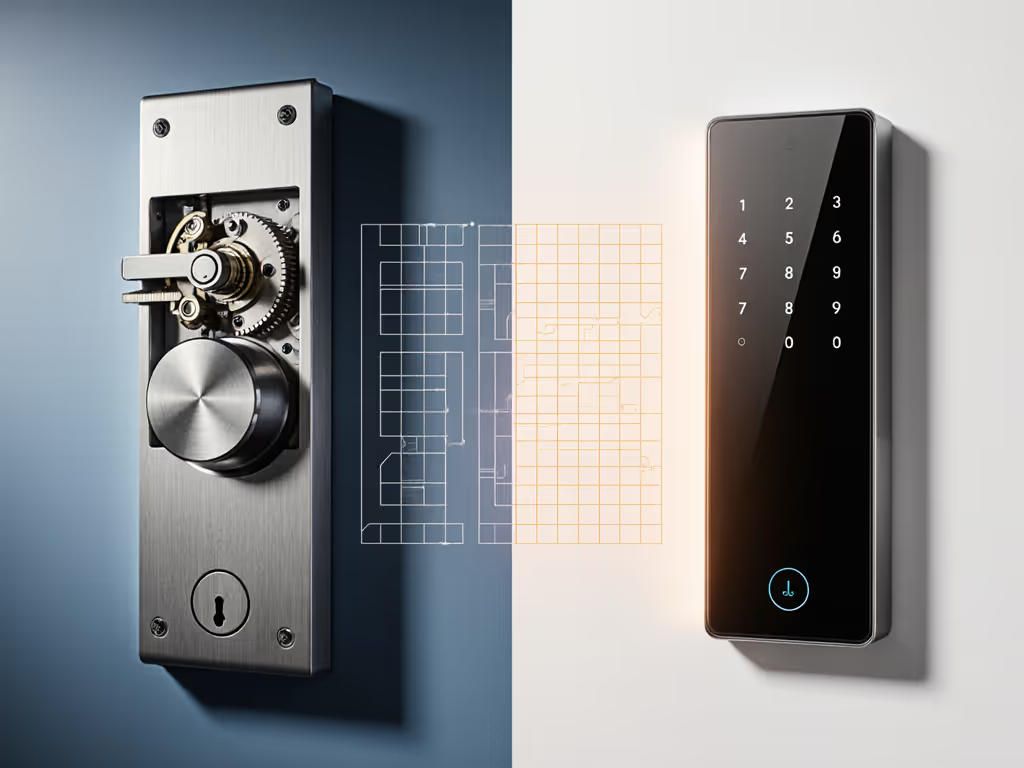
Museum security protocols mandate local API capability for all electronic systems. When evaluating exhibition space access control systems, I assess whether:
- Physical keys or local codes work independently of network status
- Audit logs are stored on-device with local export capability
- Firmware updates don't require cloud authentication For brand-by-brand comparisons of update methods and offline reliability, see our smart lock firmware updates guide.
Galleries frequently fail these tests. A recent survey of 32 commercial gallery systems revealed 78% couldn't issue temporary access codes without active internet connectivity, a critical flaw for environments needing client access management during outages. Meanwhile, museum systems maintain climate-controlled display security through redundant local control: pneumatic releases for traveling exhibits, mechanical overrides for climate-sealed cases, and manual key access for emergency conservation work.
This isn't merely theoretical. When a European museum's network was compromised during a 2024 ransomware attack, staff accessed high-value artifacts through local mechanical keys while IT contained the breach, proof that security fails at the weakest dependency.
Critical Evaluation Framework for Physical Security
Don't trust vendor marketing claims about "museum-grade" security. Apply these evidence-based criteria when assessing any high-value protection system:
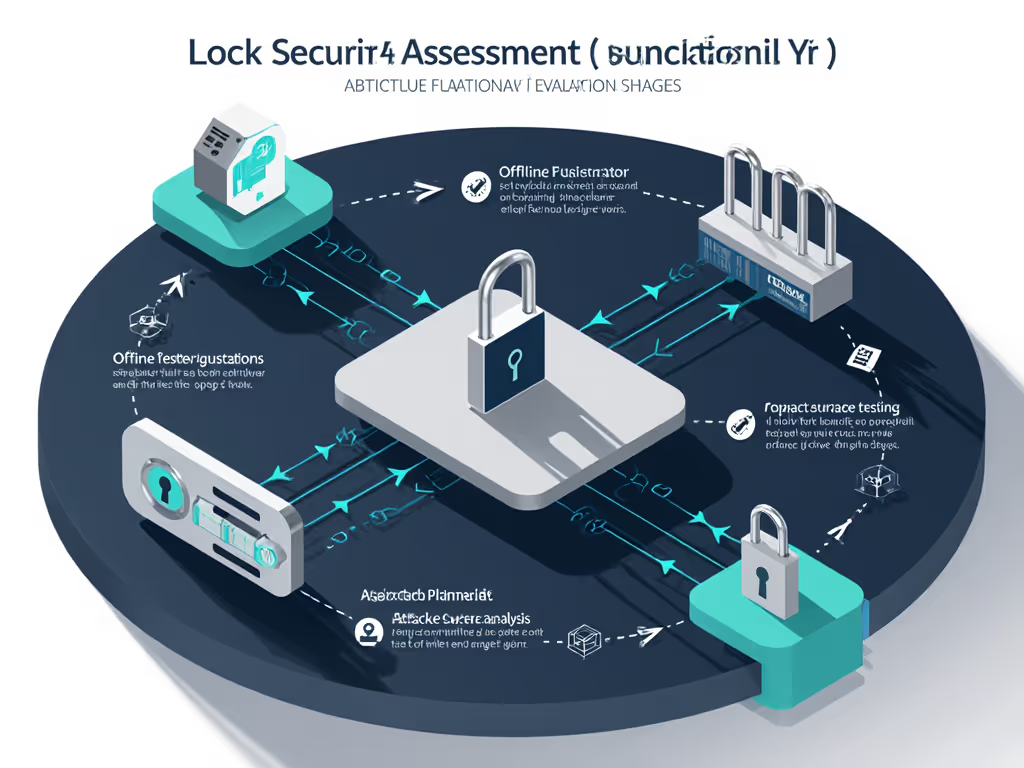
1. Offline Functionality Verification
Force-test the system with all network connections severed. If you need models proven to operate without internet, start with our smart locks that work offline guide. Does it:
- Maintain access control?
- Record audit logs locally?
- Allow emergency mechanical access without special tools?
2. Mechanical Core Assessment
Verify physical security ratings through independent testing:
- ANSI/BHMA Grade 1 certification (minimum 800,000 cycles)
- Drill resistance through hardened steel components
- Tamper-proof mounting hardware (no exposed screws)
3. Attack Surface Analysis
Map every dependency:
- Does electronic functionality require cloud authentication?
- Is there a local API for direct control?
- Can firmware updates be verified offline?
Translating Museum Principles to Residential Security
You don't need Abloy PROTEC systems for your home, but you should demand equivalent resilience. Modern residential threats mirror museum challenges: rental hosts manage client access management, collectors protect high-value items, and families need climate-controlled display security for homes with valuable artwork.
When evaluating residential locks, apply museum security protocols:
- Prioritize mechanical integrity no Grade 2 or lower locks for primary entry points
- Verify offline functionality through router disconnection tests
- Demand local audit logs that don't require cloud access
- Require physical keys that work independently of electronics
The homeowners I've consulted often discover their "smart" locks meet only gallery-grade security standards, convenient for daily access but dangerously fragile during outages. For a deeper look at real-world attack methods and defenses, read our smart lock door vulnerabilities report. True security means functioning when it matters most, not just when the internet's up.
Final Verdict: Security That Works When It Counts
Museums prioritize physical security with digital enhancements. Galleries often prioritize digital convenience with physical compromises. For protecting anything of value, whether a Van Gogh or your family's safety, the museum approach proves superior:
✅ Museum locks treat mechanical integrity as the foundation, with electronics as secondary layers ❌ Gallery locks often reverse this priority, creating single points of failure
For homeowners, the lesson is clear: demand locks where the weakest link remains stronger than likely threats. Test systems offline. Verify mechanical ratings. Ensure no cloud dependency for core functionality. The difference between gallery-grade and museum-grade security isn't about price, it is about whether your protection works when infrastructure fails.
As I tell every client after documenting another cloud-lock outage: Trust math, not marketing. Demand security that functions when disconnected, because the only lock that matters is the one that works when you're standing outside your door in the dark.
Related Articles